
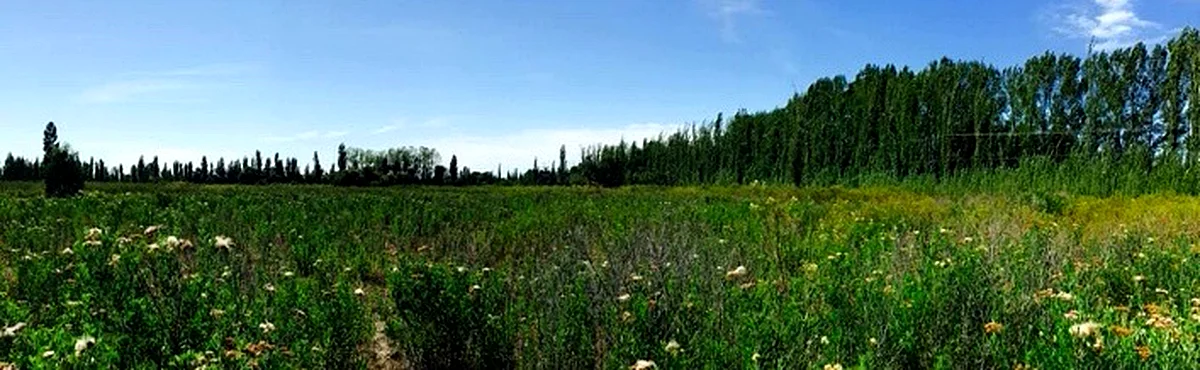
In Mendoza, an irrigation water right belongs to the land, not to the owner: it cannot be sold separately and passes automatically with the deed. A definitive right (derecho definitivo) has priority; an eventual right only gets water in surplus years. Before buying, get the right's type, the registered hectares, and a no-debt certificate from the Departamento General de Irrigación, and check that the right has been used: abandonment for more than five years can extinguish it.
Last updated October 12, 2026 · Part of the Argentina regions
Why water is the first question in Mendoza
Mendoza is a desert: Mendoza city gets about 240 mm of rain a year and San Rafael about 360 mm. Vineyards, olive groves, gardens, and most rural projects live on snowmelt from the Andes, delivered through rivers, dams, and a network of canals. A parcel with a secure water right and the same parcel without one are, in practice, two different assets.
That is why rural prices in Mendoza are quoted with the water right attached, and why buyers comparing listings should start with the water certificate, not the photos.
The legal basis: the right is tied to the land
Article 186 of the Mendoza constitution makes the use of public water "a right inherent to the land" it was granted to. The 1884 Water Law (Ley General de Aguas), still in force, follows the same logic: the right cannot be separated from the land (art. 14), every contract over the land includes the water right (art. 24), and the right cannot be seized or sold on its own (art. 25) (Water Law text).
For a buyer this is good news: when you buy the land, the water comes with it, and the seller cannot keep it or sell it to a neighbour. It also means the water cannot simply be moved to another plot you own later.
Types of water rights
The certificate will name one of these categories. The difference matters most in dry years.
- Water is allocated by registered hectares (hectáreas empadronadas), not by the deed area. Compare the two numbers.
- When a river cannot deliver enough water, the Irrigation Department declares rotations (turnos), and water is shared in proportion to registered hectares.
- Some parcels also have a summer top-up right (refuerzo) or access to a canal association's backup well.
| Type | What it means | Buyer takeaway |
|---|---|---|
| Definitive (definitivo) | Permanent concession granted by law; served first from the river | The strongest position. This is what serious agricultural and hospitality projects need. |
| Eventual (eventual) | Water only when there is surplus after definitive rights are served; ranks by age among eventual rights | Can mean little or no water in dry years. Price it accordingly. |
| Precarious permit (precario) | Temporary permit (up to 10 years), revocable without compensation | Not a secure basis for a long-term investment. |
| Groundwater concession | Well permit and use concession from the Irrigation Department, with meters and annual declarations | Check it is registered, metered, and in a zone where wells are allowed. |
Who manages the water
The Departamento General de Irrigación (DGI) runs the rivers, dams, and primary canals, through river sub-delegations: Mendoza, Tunuyán Superior (Uco Valley), Tunuyán Inferior, Diamante, and Atuel. San Rafael parcels fall under the Diamante or Atuel sub-delegation.
Below that level, each canal is run by its users through an Inspección de Cauce, a self-governed canal association created under Law 6405. Users elect the inspector and approve the canal budget. About 60% of a typical irrigation bill goes to these associations, the rest to the DGI (Irrigation Department, April 2026).
Every year the canals are shut for maintenance (the corta). In 2026 the Atuel network was closed from April 17 to August 10 and the Diamante from June 3 to August 3 (Government of Mendoza).
What it costs to hold a water right
Owners pay an annual irrigation fee (canon) to the DGI plus the canal association's share (prorrata), charged per registered hectare. The fee is owed whether or not you use the water. In 2026 the first instalment was due on February 13, with discounts for paying the year upfront (Government of Mendoza, January 2026).
Ask the seller for the last bills: they show the registered hectares, the canal, and the exact annual cost, and any debt has to be paid before the deed.
How the right transfers when you buy
Because the right belongs to the land, the escribano handles the transfer as part of the deed. Under the procedure agreed between the DGI and Mendoza's Notarial College, the notary requests a debt certificate from the DGI, the debt is settled, a no-debt certificate (libre deuda) is issued, and after signing the notary files the deed so the DGI changes the holder's name.
- DGI account (padrón) number and certificate stating the type of right and registered hectares.
- No-debt certificate for surface water and any well.
- Survey plan showing intakes, internal ditches, and any well location.
- Proof the right has been used: recent bills, irrigation records, or the canal inspector's confirmation.
- For wells: the concession resolution, meter, and annual sworn declarations.
Risks: drought, non-use, and changing the use
Drought: water years vary a lot. The 2025-26 season was dry on both San Rafael rivers, with the Diamante delivering 548 hm³. For 2026-27 the DGI forecasts a wet Diamante (1,090 hm³, 112% of average) and a normal Atuel (1,080 hm³, 100%) (Irrigation Department, October 2026). Mendoza's drought plan allows staged cuts and rotations in severe years, with human consumption first.
Non-use: the Water Law allows a surface right to be lost after more than five years of abandonment, and groundwater concessions can lapse after two years of unjustified non-use. A parcel that has been idle for years needs a careful check, and a buyer should keep the water in use after closing.
Wells: the DGI has frozen new well permits in restriction zones, including the whole Uco Valley (Resolution 1131/2023), where many monitored wells were at record lows. Do not assume you can drill.
Changing the use: to subdivide or urbanise, owners usually renounce the agricultural right, and once renounced the land can never again receive a definitive right. Subdivision projects need a feasibility certificate from the river sub-delegation. Keep the agricultural right if your plan is a vineyard, finca, or lodge that still farms the land.
Water and foreign buyers
There is no nationality rule for holding a Mendoza water right; it follows whoever owns the land. The national limits on foreign ownership of rural land are a separate question and changed in September 2026. Check the current status in can foreigners buy land in Argentina? before you sign.
For a worked example, the Rama Caída estate in San Rafael is listed with a definitive surface-water right on an 8 ha irrigation base; the checks above are exactly what a buyer should run on it. See also buying a vineyard in Mendoza and the San Rafael buyer guide.
Questions buyers ask
Can a water right be sold separately from the land in Mendoza?
No. Under the Mendoza constitution and the 1884 Water Law, the right is inherent to the land and passes with every sale of it.
What is the difference between a definitive and an eventual water right?
A definitive right is a permanent concession served first from the river. An eventual right only receives water when there is surplus, so it can get little or nothing in dry years.
Can I lose a water right if I don't use it?
Yes. The Water Law allows a surface right to be lost after more than five years of abandonment, and groundwater concessions can lapse after two years of unjustified non-use. Fees are owed even when the water is not used.
Can I drill a well on land I buy in Mendoza?
Only with a permit and concession from the Irrigation Department, and new wells are frozen in restriction zones such as the Uco Valley. Check the zone before you buy.